
In the winter of early 2020, Shubham Sharma was fretting. Not only was the team he led crashing out of Ranji Trophy but also because he wasn’t sure of a place again in the Madhya Pradesh side following a miserable campaign with the bat. To empathize with him was his roommate Rajat Patidar, who was also going through a rough patch, averaging less than 16 in that Ranji Trophy season.
The two 26-year-olds from Indore had known each other since their pre-teens and come through the age-groups of the state side. Yet when Shubham posed the question – “What will happen to us? Do you think we’ll ever get to play Ranji Trophy again?” – he got a rather unexpected response from his long-time friend. “So what if I don’t get to play Ranji Trophy? I’ll play wherever I get a chance. If it’s club cricket, so be it.”
For as stunned as Shubham was with that response, he wasn’t really surprised. “That’s Rajat
Purely for his strokeplay, Patidar may have been a standout batter in Madhya Pradesh, but it wasn’t a career that had moved forward as smoothly as many expected given his skills.
But it’s no surprise that he was earmarked as the next big batting sensation from Madhya Pradesh. After all, a rich legacy of the Holkars in the 1950s notwithstanding, not since the formation of Madhya Pradesh in 1950 has a frontline Indian batter played Test cricket from the central Indian state. Patidar is expected to be its first.
It’s not just his teammates who gush over his batting talent, but even the coaches. Amay Khurasiya, who was the last specialist batter from the state to play for India (only ODIs) and Patidar’s long-time coach, sheds light on what made him a coach’s delight. “With this boy, I’ve observed one thing. If you give him a task, he is on it. He will not cut corners. He used to sweat it out and practice for hours and hours in the field. When you see a boy with that sort of commitment, you start doing progressive coaching because you know this boy is committed. When the student arrives and is ready, the teacher is already there.”
In principle, Patidar had all the ingredients of a good batter: ability to judge length early, technique to play spin and pace with equal ease, and a free-flow of the bat. Yet, in the five seasons before the pandemic, he averaged only 37.54 in first-class cricket; his downfall being his inability to make the right shot selection. Thus, for his well-wishers, he delighted as much when he scored as he frustrated when he was dismissed
His conversion rate could have been better, which he did (work on it) later,” Khurasiya says. “That’s something we spoke about when he was under my tutelage. There were a lot of areas we worked on. It starts from the basics. Rajat was a piece in process.
“We had to work on his technique. As a coach, I like to work on the mental aspect of things and when there were turbulent times, I tried to see if I could contribute to his career. At that time, he was a young boy – dedicated and sincere. The best part was that he was focussed on whatever job he was given in terms of his technique.”
His transformation – in terms of consistency in registering big scores – has been drastic in the last two years, especially in the longer format, with his average nearly doubling to 64.70.
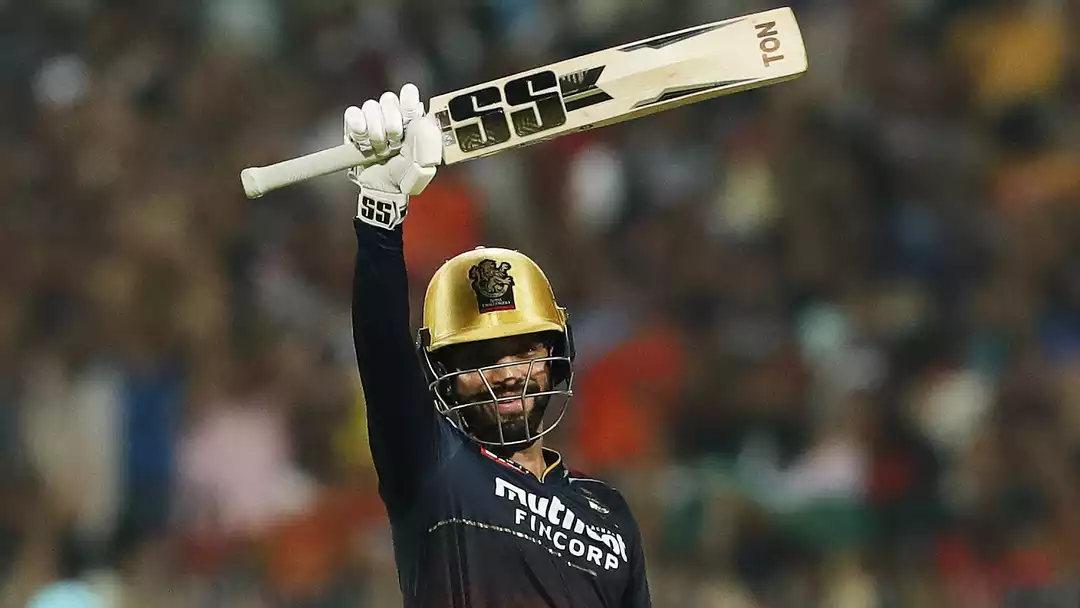
A good reason for that, as Shubham explains, was his success at the RCB in IPL 2022 – when he hammered 333 runs in 8 games, including a century and two fifties. “When he returned after doing well in the IPL, the confidence he gained from that experience changed a lot in him,” notes Shubham. “He doesn’t fear anyone anymore. He is playing more fearlessly. He hadn’t played against big players before that and when he played and did well against top bowlers, he realised for himself that he too belongs at that level.”