
Bhakta Pralhad is yet another classic by the father of Indian Cinema, Dada Saheb Phalke. It tells the mythological legend of demon king Hiranyakashyap and his defiant son Prahalad, who is a devotee of Lord Vishnu. Hiranyakashyap did everything — from burning Prahalad with oil to getting him trampled under elephants — to stop him from worshipping Vishnu, but Prahalad’s faith remained unscathed. Per the legend, the film shows the Lord finally appearing to his rescue and killing his demon father. The film was later remade in most of the Indian languages.
Now, let’s not forget the fact that this was the time when the cinema was still relatively new to colonised India and the viewers were strongly associating the actors with their mythological roles outside of the theatre as well. Interestingly, this is also the time when buses were introduced in India, in the coastal city of Mumbai.
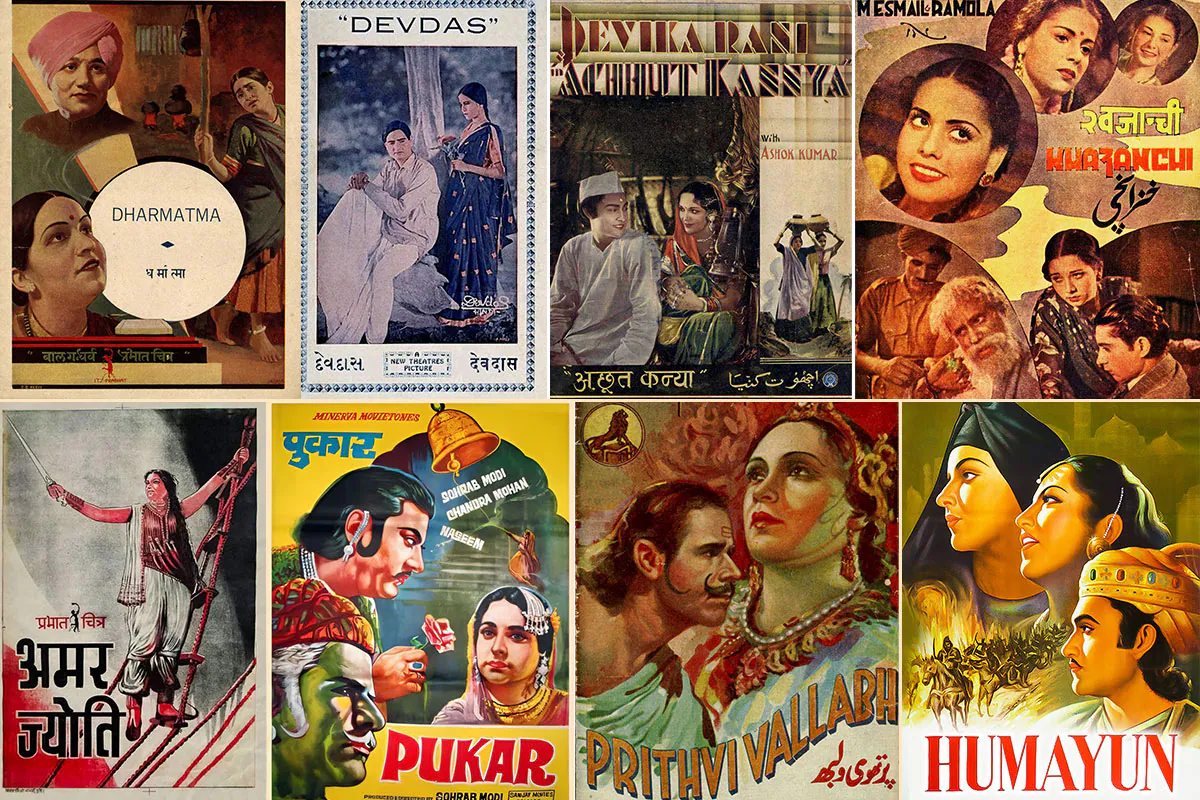
Dharmatma (1935)
Where: ShemarooMe
Dharmatma came to the Indian audience when social injustice and untouchability made the rule of the day. It is a biopic of Sant Eknath – a philosopher, saint, and poet from 16th century Maharashtra. The film particularly focuses on his humanitarian defence of the ‘untouchable’ castes.
Dharmatma provides a rare glimpse into the deeply troubling social fabric of that time. The bilingual film was shot in both Hindi and Marathi and was one of the only four films made on casteism at that time.
The film was originally titled “Mahatma”, but the name didn’t get a clearance from the certification board (probably because the term had become synonymous with Gandhi at the time?). This is also the year when The Government of India Act 1935 was passed by the British Parliament.
Pukar (1939)
Where: JioCinema
Get a taste of the bygone days and lengthy Urdu dialogues in a 4:3 aspect ratio with the black-and-white classic Pukar. One of the earliest Muslim social films of the time, Pukar follows the inner conflict of Mughal Emperor Jehangir – known for his “an eye for an eye” attitude – when a woman accuses his wife Noor Jahan of murdering a commoner by mistake.
It is worth mentioning that after a few months of the release – when people were probably still bringing up the film and its characters in their evening ritualistic tea breaks – British India officially declared war against Nazi Germany, during World War II. (Isn’t it intriguing to think how the timeline for wars and art co-exist?)
Kismet (1943)
Where: JioCinema
Kismet holds a special position in the history of Indian cinema for a lot of reasons. It was the first Indian blockbuster film, which grossed one crore and redefined the position of cinema in India. It is also the first one to show an anti-hero character in prominent dual roles. Packed with a bunch of patriotic songs, the film resonated with the ongoing struggle for Independence as well.
Here Ashok Kumar – an undisputed superstar of that time – steps into the shoes of a pickpocket, who doesn’t have an ounce of shame for his immoral acts. (You probably remember him from his role as Professor Sinha in Mr. India. Or is it just me?). Moral epiphanies, emotional breakthroughs, and strides of romance are in store.